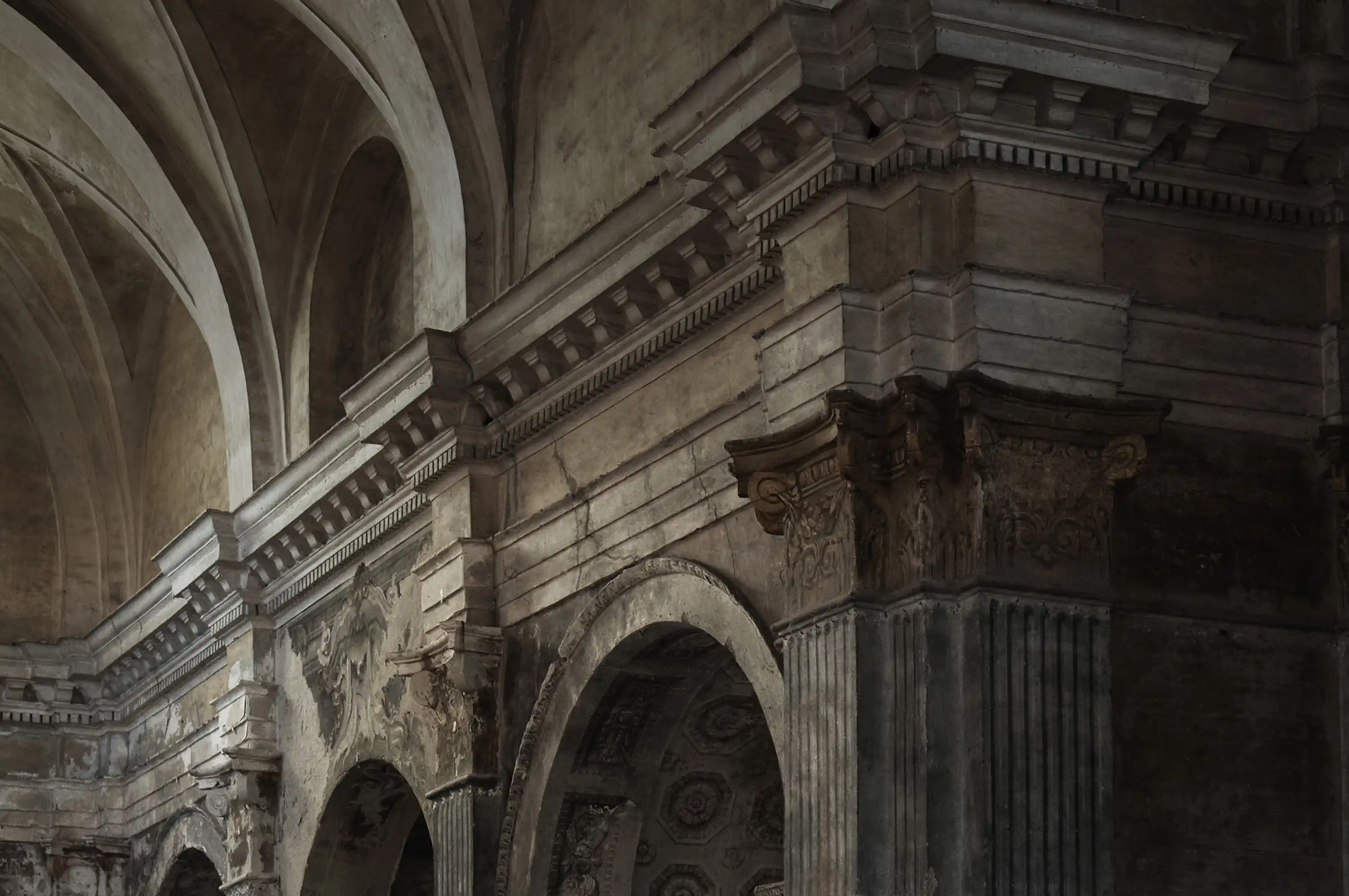
The site’s origins lie in the ancient church of San Donnino, which, according to local tradition, dates back to at least the eleventh century. A visit by Carlo Borromeo in 1575 linked the history of the building to the Archbishop of Milan. The church was enlarged and transformed in the early seventeenth century. Work begun in 1611 led to the configuration that, through subsequent alterations, continues to define the space today.
Over the following centuries, San Carlo went through markedly different periods. It lost its status as a parish church in 1788 and was requisitioned during the conflicts of the nineteenth century. Periods of renewed worship alternated with further closures. Its use changed repeatedly during the twentieth century: storage for hospital supplies, a gymnasium, a timber depot, premises for cooperatives and other practical uses. These changes left physical and symbolic traces that remain part of the history of the place.
In 1950, the church was formally closed to public worship. Decades of intermittent use and prolonged closure followed. In 2021, the San Carlo Cremona project reopened the building to the public as a place dedicated to contemporary art.